May 25, 2026
GDP Logistics in Spain: the standard that protects medicines

When a medicine leaves the manufacturing line and begins its journey to pharmacies, hospitals, or wholesale warehouses, the most demanding logistical responsibility in the healthcare sector begins: its distribution. It is not enough for the product to be manufactured correctly; it is essential that it reaches its destination in exactly the same condition in which it left the production facility.
In Spain, compliance with GDP (Good Distribution Practices) is a fundamental requirement for all companies operating within the pharmaceutical supply chain. It is the standard that determines which companies can work with the pharmaceutical industry and which cannot.
What Is GDP Logistics and Where Does It Come From?
GDP refers to the set of guidelines established by the European Union to regulate the storage, handling, and distribution of medicinal products for human use. Its purpose is to ensure that medicines maintain their quality, identity, and integrity throughout the entire supply chain.
The regulatory framework governing GDP includes:
● Directive 2001/83/EC.
● Guidelines on Good Distribution Practice (2013/C 343/01), published in the Official Journal of the European Union.
● Royal Decree 782/2013, which regulates the distribution of medicinal products for human use in Spain and adapts European requirements to the national context.
Its scope goes far beyond transportation. GDP covers the entire logistics process, from the receipt of medicines in the warehouse to their delivery to the final customer.
What Does GDP Regulation Actually Require?
Although GDP covers multiple aspects, proper compliance revolves around a series of key requirements:
● Temperature Control and Environmental Conditions. Medicinal products must be stored and transported within validated temperature ranges. This requires continuous monitoring systems, alarms, and properly documented thermal mapping exercises.
● Full Batch Traceability. Every movement of a product must be recorded. This allows any batch to be quickly identified and located in the event of an incident or product recall.
● Robust Documentation System. All information must be legible, traceable, and retrievable. In addition, any IT systems involved in the process must be validated.
● Qualification of Suppliers and Subcontractors. Companies must regularly audit all parties involved in the logistics chain to verify compliance with GDP requirements.
● Staff Training. Personnel handling pharmaceutical products must receive specific and ongoing training in Good Distribution Practices.
● Incident Management and Counterfeit Medicines. Companies are required to have clear procedures in place to manage complaints, returns, and suspected counterfeit or damaged products.
● Contingency Plans. Defined protocols must be established to respond to incidents such as power failures, logistics disruptions, or security issues.
As a result, these requirements create an operating model that compels companies to professionalize their processes while ensuring greater control over their operations.
Who Oversees GDP Compliance in Spain?
In Spain, supervision of GDP compliance falls under the responsibility of the Spanish Agency for Medicines and Health Products (AEMPS). This authority is responsible for authorizing distributors, carrying out periodic inspections, and issuing compliance certificates.
These certificates are published in the public EudraGMDP database, together with Wholesale Distribution Authorisations (WDA). This ensures transparency and enables laboratories and customers to verify the status of any logistics operator.
Although not all stakeholders are legally required to obtain certification, in practice pharmaceutical manufacturers, wholesalers, and distributors require GDP accreditation as a condition for establishing business relationships. In a sector where trust and the absence of incidents are critical, operating without GDP certification can significantly limit business opportunities.
GDP and the Cold Chain: The Most Demanding Challenge in
Pharmaceutical Distribution
One of the most critical aspects of GDP compliance is cold chain management.
Products such as vaccines, biotechnological medicines, blood-derived products, and certain oncology treatments require extremely strict temperature conditions. Any temperature excursion can compromise the integrity of an entire batch, leading to significant economic and healthcare consequences.
To ensure product integrity, GDP regulations require:
● Qualified transportation routes and packaging.
● Real-time temperature monitoring and recording throughout transport.
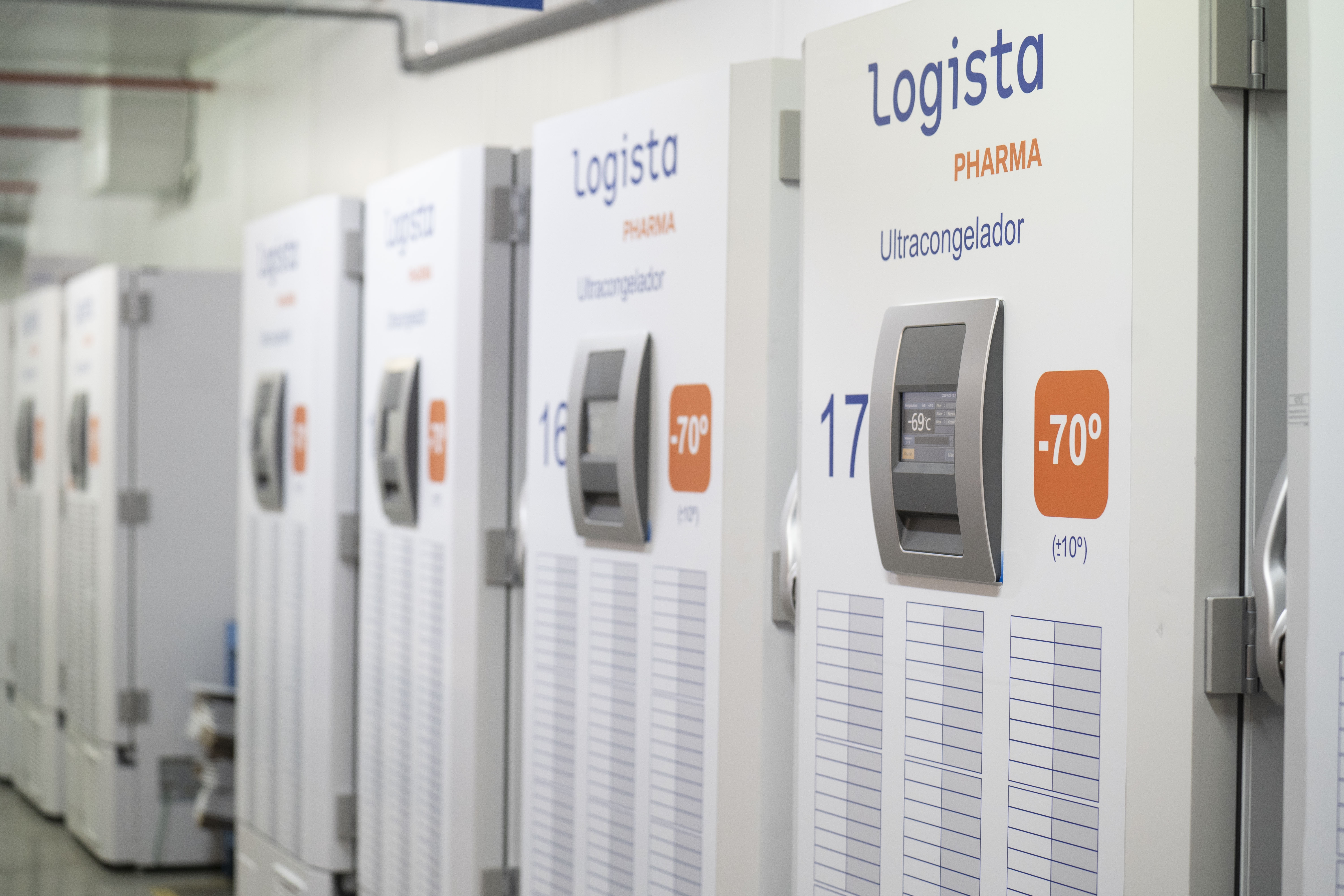
● Temperature-controlled storage, including ranges of 15–25°C, 2–8°C, -20°C, -70°C, and -196°C, supported by periodic thermal validation, continuous monitoring, and immediate response protocols.
At Logista, cold chain management is a core element of our pharmaceutical operations. Through dedicated temperature-controlled distribution solutions, required conditions are maintained at every stage of the process.
Who Do GDP Requirements Apply To and Why Is
Choosing the Right Operator Important?
GDP requirements apply to all stakeholders involved in the supply chain:
● Wholesale distributors.
● Pharmaceutical logistics operators.
● Specialized transport companies.
● Logistics platforms.
● Pharmaceutical manufacturers that outsource distribution.
● Any company that comes into contact with a medicinal product after it leaves the manufacturer.
Therefore, selecting the right logistics operator is a strategic decision for pharmaceutical companies. It is not simply a matter of cost or delivery times; it is about guarantees.
A logistics partner with an active GDP certification, validated facilities, complete traceability, and proven expertise acts as an extension of the manufacturer's quality systems. Conversely, an operator that fails to comply with GDP requirements may compromise product integrity, trigger regulatory issues with the AEMPS, and even put patient health at risk.

Logista and GDP Logistics: A Network Designed to Reach Wherever the Pharmaceutical Industry Needs It
At Logista, we integrate Good Distribution Practices across all our pharmaceutical operations, ensuring the highest standards of quality and control at every stage of the process.
We operate a network of 11 pharmaceutical facilities across Spain, Portugal, and Italy, enabling nationwide coverage and fast, efficient, and transparent access to all pharmaceutical channels. This allows us to provide scalable GDP-compliant solutions without compromising the precision required by the sector.
Through specialized subsidiaries (Logista Parcel, Logista Freight, NACEX by Logista, and El Mosca by Logista), we manage temperature-controlled pharmaceutical distribution both nationally and internationally.
Our warehouses and logistics platforms comply with European GDP standards and feature advanced monitoring, traceability, and document management systems, allowing us to ensure full compliance during any inspection or audit.
In addition, our multimodal distribution expertise allows us to design tailored solutions for each product by combining road, sea, and air transport under GDP requirements.
Conclusion: GDP Is Not a Formality, It Is
an Operational Culture
GDP logistics in Spain has evolved from being a competitive advantage to becoming an essential requirement. Regulatory demands from the AEMPS, together with the expectations of pharmaceutical manufacturers and distributors, have established GDP compliance as an indispensable industry standard.
However, the real difference lies not in holding the certificate itself, but in how companies integrate GDP principles into their daily operations through employee training, effective responses to temperature deviations, and rigorous documentation practices.
At Logista, we have been working under this approach for decades, integrating GDP principles into the way we operate. Because in pharmaceutical distribution, there is no margin for error.
The information published on this website is of a general nature and is not intended to meet any individual needs. It does not constitute professional or legal advice and its content is for information purposes only and should not under any circumstances be used or considered as an offer to sell, a solicitation of an offer to buy or a recommendation to enter into any other transaction.
Logista has obtained the information, multimedia content and materials contained on the Website from sources it believes to be reliable, but while Logista has taken all reasonable steps to ensure that the information contained therein is correct, Logista expressly disclaims any liability for errors or omissions in the information contained in the pages of this Website. Logista reserves the right to modify, suspend, cancel or restrict the content of the Website, links or information obtained through the Website, without prior notice. Logista shall not be liable for any damages that may arise from the use of the information on the Website.