October 16, 2026
Artificial intelligence in logistics: beyond route optimisation
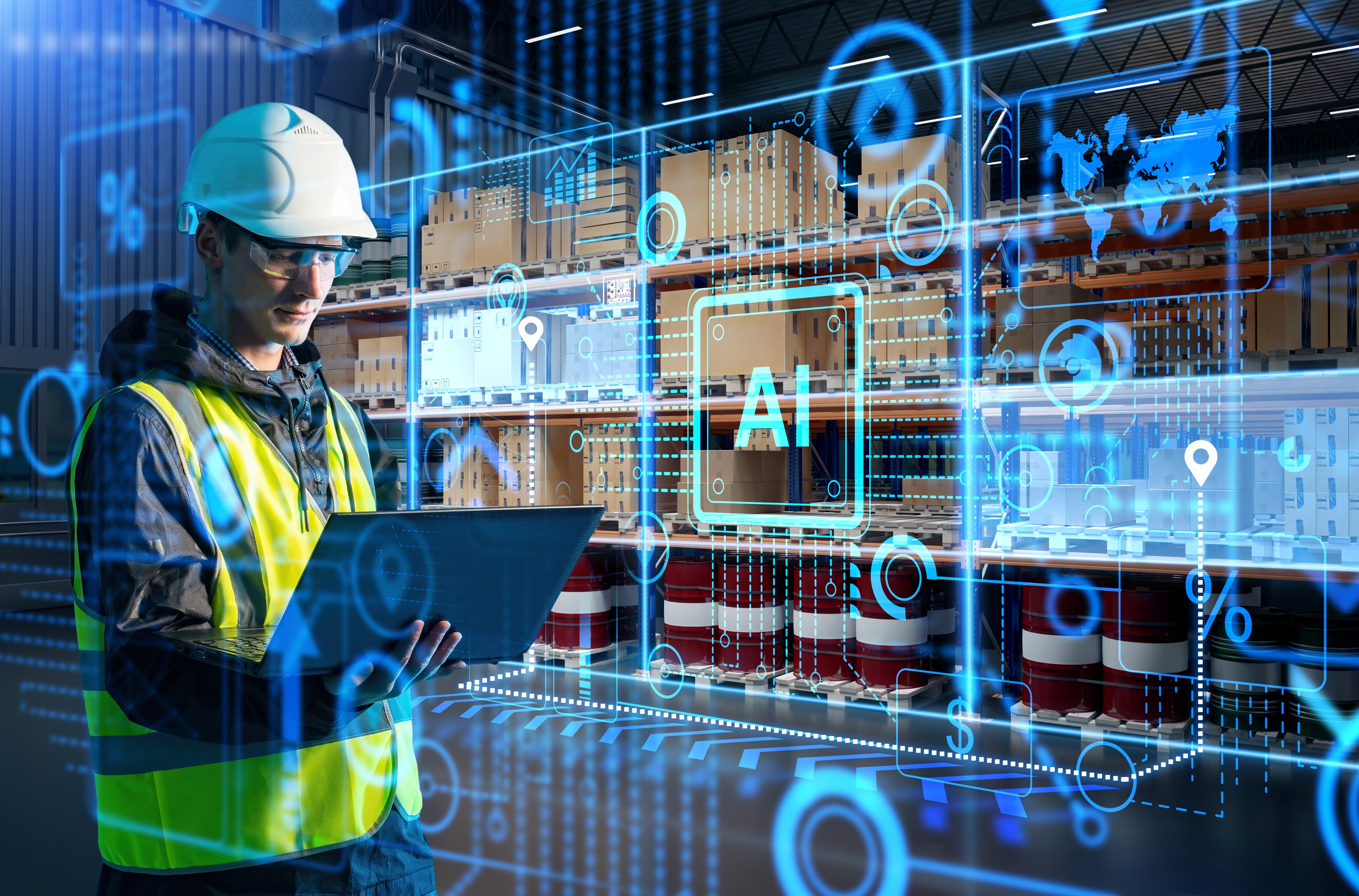
Artificial intelligence in logistics offers a wide range of applications to optimise goods reception, storage and, of course, transport routes. Route optimisation is probably one of the most widely recognised uses of this technology; however, its potential extends far beyond that. In recent years, new possibilities have emerged that enable organisations to deliver better service and gain an unrivalled competitive advantage.
Logista, as one of Europe's leading logistics operators and a specialist in distribution to proximity channels, integrates these innovations into processes that add value across the supply chain. Below, we explain how AI works within integrated logistics and the transformative applications that will shape the future of the sector.
What do we mean by artificial intelligence
in the supply chain context?
Traditionally, artificial intelligence is defined as any system capable of solving problems and reaching conclusions autonomously, without the need for external intervention. Within this concept, we must consider machine learning, which learns from data and makes decisions, and deep learning, a subset of machine learning that uses neural networks to recognise complex patterns and make more sophisticated decisions.
How is artificial intelligence applied within the supply chain? For example, in smart logistics, a vehicle can make autonomous decisions regarding cargo temperature based on historical data and learned patterns. Another possibility is that, through deep learning neural networks, organisations can recognise voice patterns or analyse large volumes of data to optimise complex processes.
Overall, integrated logistics is progressively incorporating new technologies to enhance service quality, and Logista applies them across its various solutions.
The flagship application: how has route optimisation
evolved through AI?
In recent years, AI-powered route optimisation has advanced significantly, incorporating new capabilities that go far beyond simply calculating distances. Today, a variety of real-time variables are integrated to enable more accurate and strategic decision-making, including weather conditions, live traffic information, vehicle load capacity and utilisation, as well as delivery windows.
With this information, logistics companies can determine the most efficient route, dramatically improve delivery times, reduce fuel consumption (contributing to greener and more sustainable logistics), and enhance service quality, even in last-mile operations. Thanks to geolocation devices and sensors, these levels of efficiency can now be achieved on a large scale. This is where machine learning and deep learning in logistics have made a substantial impact, transforming route planning from a complex task into a competitive advantage.

Beyond routes: the true frontiers of ai in logistics
Beyond route optimisation, artificial intelligence in logistics has multiple applications that are reshaping the sector and opening new frontiers for delivering superior service quality.
Predictive logistics: anticipating demand and disruptions
The development of machine learning algorithms makes it possible to analyse both historical delivery data and external factors such as public holidays, unexpected global events and demand peaks. Black Friday and Easter are examples of events associated with significant increases in activity. Thanks to these algorithms, organisations can forecast demand with unprecedented accuracy and adopt the necessary measures to prevent incidents or rising costs.
This capability to accurately predict the impact of economic fluctuations or changes in consumer trends enables a proactive response, minimising both operational and financial risks.
Smart warehouses: efficiency and automation
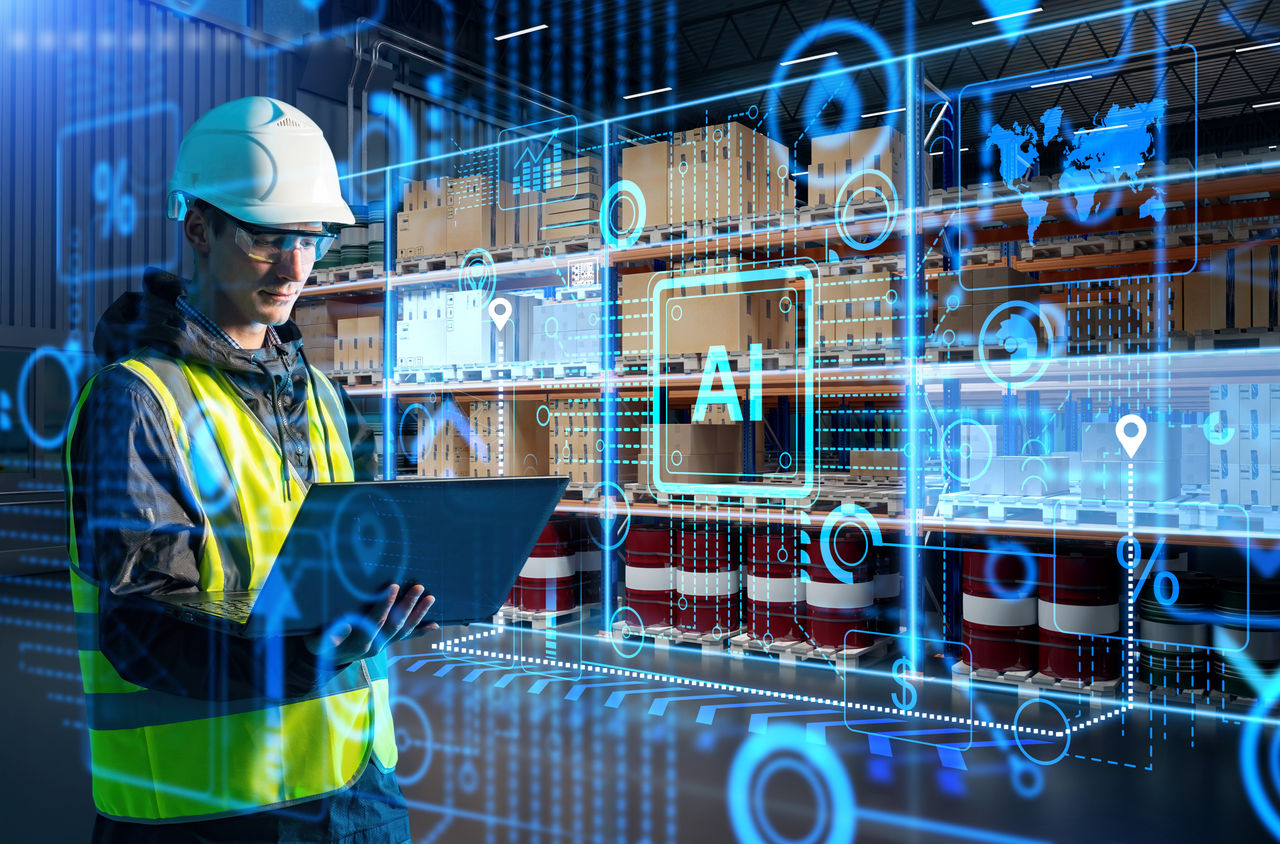
Artificial intelligence is not only applied to transport operations but also to warehousing. The concept of Smart Warehouses is based on the use of dynamic safety stock levels, autonomous mobile robots (AMRs) for picking operations, and computer vision systems that perform quality control and goods monitoring functions. These systems enable the deployment of autonomous robots that not only move packages but also learn and optimise their routes in real time.
The integration of these technologies facilitates the reduction of costs and human error throughout the process, resulting in a significant improvement in operational efficiency.
In pharmaceutical logistics and the food sector, where Logista has extensive experience, this capability is essential for maintaining the traceability of goods and products with the highest levels of reliability.
Predictive maintenance for an always-operational fleet
Predictive maintenance and predictive logistics capabilities are essential for ensuring optimal fleet performance over the medium and long term while extending vehicle lifespan.
The availability of sensors and IoT technologies makes it possible to detect anomalies in different fleet components, from pressure and temperature to noise levels and interior visual monitoring. All of this can be monitored through a centralised system when required. As a result, organisations can prevent breakdowns, unplanned downtime and premature wear, reducing operational costs while improving fleet availability.
A hyper-personalised end-customer experience
Personalisation of logistics services is one of the value-added aspects most highly prioritised by customers. In this area, companies can provide various AI-powered solutions, including conversational chatbots, highly accurate ETA (Estimated Time of Arrival) calculations that improve transparency and trust, and personalised delivery options through specific time slots or designated collection points, adapting to the individual needs of each customer.
The human factor: AI as a tool to enhance talent
AI represents an unprecedented opportunity to develop and empower talent through a people-first approach. It is essential to understand that AI does not replace human capital or the strategic value it brings.
For example, there are repetitive checking and classification tasks that AI can perform efficiently. This frees up time and resources, allowing professionals to focus on creative, strategic and higher-value activities. In today's knowledge economy, empowering talent and enabling people to realise their full potential is fundamental to innovation and competitiveness.
Employees can therefore concentrate on other high-impact activities, such as exception management, solving complex problems and building strong customer relationships. For this reason, AI becomes a support tool that improves decision-making, enhances human capabilities and fosters a culture of innovation, enabling logistics companies to become more efficient, intelligent and adaptable.
Logista: a partner for implementing a future-focuse
logistics strategy
At Logista, we understand that true transformation arises from the synergy between these applications, creating an intelligent and adaptable logistics ecosystem that drives efficiency and competitiveness. We use artificial intelligence across every stage of the logistics process to optimise our internal operations and enhance customer service. AI creates new opportunities through predictive logistics, smart warehouses and personalised customer experiences.
As a strategic partner with a proven track record and a strong commitment to quality and sustainability, we help businesses integrate these solutions into their corporate strategy in a scalable way, according to their specific needs. We invite you to learn more about us and discover how we can support your logistics digital transformation journey.
The information published on this website is of a general nature and is not intended to meet any individual needs. It does not constitute professional or legal advice and its content is for information purposes only and should not under any circumstances be used or considered as an offer to sell, a solicitation of an offer to buy or a recommendation to enter into any other transaction.
Logista has obtained the information, multimedia content and materials contained on the Website from sources it believes to be reliable, but while Logista has taken all reasonable steps to ensure that the information contained therein is correct, Logista expressly disclaims any liability for errors or omissions in the information contained in the pages of this Website. Logista reserves the right to modify, suspend, cancel or restrict the content of the Website, links or information obtained through the Website, without prior notice. Logista shall not be liable for any damages that may arise from the use of the information on the Website.